 By Raushan Kumar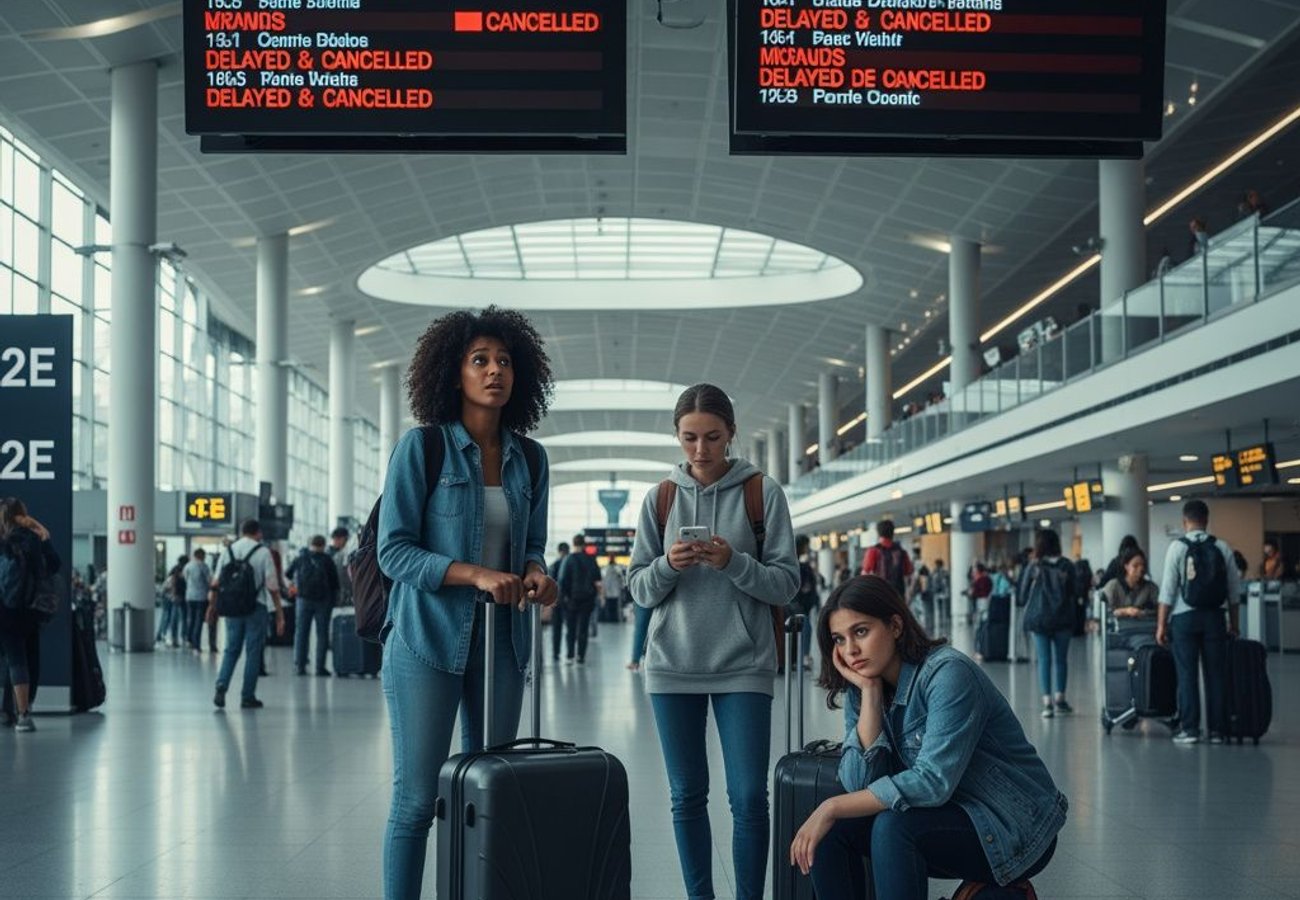
Europe's Busiest Hub Descended Into Operational Freefall
Picture this: June 19, 2026. You arrive at Charles de Gaulle Airport in Paris with your flight confirmation in hand. The departure board tells a different story—your flight isn't just delayed. It's gone. Canceled. No warning. No explanation.
This wasn't an isolated passenger tragedy. It was systemic collapse. On that single day, France's aviation lifeline experienced simultaneous breakdowns that rippled across two major airports, grounding aircraft and stranding thousands. 11 flights were canceled outright. Over 300 additional flights faced delays. The carriers involved read like a who's who of European aviation: Air France, HOP!, Lufthansa, KLM, Delta Air Lines, and easyJet.
For perspective, Charles de Gaulle processes roughly 70 million passengers annually—making it Europe's second-busiest airport after London Heathrow. When an airport of that magnitude hiccups, the entire continent feels it.
Reddit: "Stuck at CDG for 8 hours. Air France says it's a 'system issue,' but won't explain what that means. No rebooking, no real answers. Just chaos." — r/travel
The Damage Report: Which Airlines Got Hit Hardest
The scale of operational meltdown became apparent within hours. Air France absorbed the heaviest punch—4 flights canceled with a staggering 191 delayed departures. That's not a few scattered delays. That's systematic breakdown.
HOP!, Air France's regional subsidiary, contributed 2 cancellations and 35 delays to the carnage. At Nice Côte d'Azur Airport, ripple effects intensified. easyJet grounded 1 flight but recorded 53 delays—a passenger nightmare for budget travelers who depend on tight scheduling and limited rebooking flexibility.
The international carriers fared relatively better but still suffered visible wounds:
| Airline | Flights Canceled | Delays Recorded | Hub Impact |
|---|---|---|---|
| Air France | 4 | 191 | Paris CDG |
| HOP! | 2 | 35 | Paris CDG |
| easyJet | 1 | 53 | Nice NCE |
| Delta Air Lines | 2 | 11 | Paris CDG |
| Lufthansa | 1 | 10 | Paris CDG |
| KLM | 1 | 5 | Nice NCE |
| TOTAL | 11 | 305+ | CDG & NCE |
Delta Air Lines had 2 grounded flights with 11 delays. Lufthansa canceled 1 flight alongside 10 delays. KLM at Nice suffered 1 cancellation with 5 delays.
The timing proved catastrophic. Mid-June marks the opening salvo of European summer vacation season. Airports were already operating at maximum capacity before the disruption hit.
What Actually Broke? The Infrastructure Question
Here's where airlines became evasive. Spokespeople cited vague "operational challenges" without specificity—a corporate deflection tactic that infuriates stranded passengers but shields airlines from legal liability.
The truth likely lies in airport infrastructure rather than individual airline failures. CDG operates three parallel runways and processes approximately 1,500 aircraft movements daily. When ground handling, air traffic control, or gate availability contracts, even fractional inefficiencies cascade exponentially.
FlightAware data analysis confirmed the pattern: delays clustered mid-morning and intensified through afternoon—hallmarks of a structural bottleneck rather than isolated mechanical failures. A single grounded aircraft at a major hub can trigger chain-reaction delays across 10+ additional flights as crews and aircraft fall out of position.
The deeper systemic issue? European aviation infrastructure hasn't scaled to match post-pandemic travel demand. Airports renovated terminals but underinvested in operational capacity—ground handling staff, air traffic control automation, and gate availability.
The Passenger Communication Collapse
What truly enraged travelers wasn't the disruption itself. Airline operations are inherently unpredictable. What sparked fury was the information blackhole.
Thousands arrived at terminals to discover cancellations with zero advance notice. Service desk queues stretched for hours. Online rebooking systems crashed under traffic load. Phone lines registered perpetual busy signals. Airlines prioritized crew positioning and aircraft availability over passenger convenience—standard crisis protocol, but brutal for families and business travelers.
Reddit: "easyJet's app crashed right when flights got grounded. Customer service line hit a 2-hour wait. This is unacceptable in 2026." — r/travel
One businessman from Hamburg reported arriving at the Lufthansa counter only to learn his flight was canceled 6 hours earlier—information never pushed to his phone or email. He spent the afternoon attempting rebooking while standing in a 200-person queue.
A family heading to Nice for their daughter's wedding faced the nightmare scenario: cancellation notification arriving after they'd already driven to the airport and parked.
Your Legal Arsenal: EU261 Rights
Anger is justified. But more importantly, you have enforceable legal rights. EU Regulation 261/2004 exists precisely because disruptions like June 19 happen with regularity. Here's what the law guarantees:
Immediate Protections
You're entitled to reaccommodation on the next available flight at zero additional cost. Airlines must rebook you on their own flights first, then competitor flights if necessary. The law doesn't care about corporate rivalries—your right to reach your destination supersedes carrier competition.
Compensation Thresholds
If the airline caused the cancellation and failed to provide 14 days' advance notice, you qualify for compensation:
- €250 for flights up to 1,500 km
- €400 for intra-EU flights exceeding 1,500 km
- €400-600 for flights over 3,500 km outside EU (partial reduction if arrival delay under 3 hours)
"Extraordinary circumstances" like extreme weather or air traffic control strikes can void compensation. Technical failures and ground handling breakdowns do not qualify as extraordinary.
Care and Assistance
During delays exceeding 2 hours, airlines must provide meals, refreshments, and hotel accommodation if overnight stay becomes necessary. They must also cover two phone calls, emails, or faxes to notify family or arrange connections.
How to Actually Claim Compensation
Airlines won't volunteer payment. Here's the actionable path:
Immediate Response: Contact customer service in-person at airport service desks, not via email. Live agents have rebooking authority; remote channels operate with multi-day response delays.
Documentation is Everything: Retain your booking confirmation, boarding pass, and any receipts for alternative transportation, meals, or hotels. Photograph the departure board showing "CANCELLED" status. This becomes your evidence file.
Alternative Transport: If rebooking delays stretch beyond 2-3 hours, explicitly request the airline book you on competitor flights. They're legally obligated to cover the cost. Air France, easyJet, and KLM have reciprocal agreements for this exact scenario.
Compensation Claims: File directly with the airline using your booking reference and claim number 261/2004. Alternatively, AirHelp and similar services operate on contingency—they collect 25-30% of recovered compensation but handle everything for you. For EU-based passengers, national enforcement agencies (in France, DGAC—Direction Générale de l'Aviation Civile) accept formal complaints.
Don't wait for the airline to contact you. Thousands of passengers never receive compensation because they assume the airline will proactively offer it.
The Larger Summer 2026 Pattern
June 19's collapse wasn't isolated. Throughout spring and early summer 2026, European airports have endured sequential crises. London Gatwick, Amsterdam Schiphol, Frankfurt, and Rome Fiumicino all reported major disruptions in preceding weeks.
The structural problem: Europe's aviation capacity is constrained. The result is a cascading summer of predictable chaos. Airlines and airport operators acknowledge the bottleneck but lack resources or urgency to resolve it within months.
For travelers, the uncomfortable reality: expect similar disruptions throughout peak season.
Recovery Timeline and Moving Forward
By evening on June 19, normalcy gradually restored. Aircraft cycled through, delays cleared, and by the following morning, operations had largely returned to baseline—though passengers experienced knock-on effects from crew positioning issues and aircraft out of position for days afterward.
Airlines and CDG committed to "root-cause analysis," but such commitments rarely translate to visible improvements within months. Structural capacity constraints require years of infrastructure investment to resolve.
Your survival strategy for peak summer 2026:
- Monitor obsessively: Use FlightAware or airline apps rather than relying on push notifications, which often arrive too late.
- Build connection buffers: Allow minimum 2.5 hours between flights at major European hubs.
- Purchase robust travel insurance: Ensure coverage for carrier-caused disruptions, not just weather.
- Maintain flexibility: Book hotels and onward reservations with free cancellation policies.
- Arrive early: 3+ hours before departure at major hubs eliminates rebooking chaos if your flight gets cancelled.
Stay flexible, document everything, and never assume an airline will voluntarily compensate you.
Related Travel Guides
Qatar Airways Flight Chaos: Middle East Airspace Crisis Forces Major Route Changes
China's Game-Changing Rail Link to Vietnam Cuts Freight Times in Half
Disclaimer: This article reports factual operational data from FlightAware as of June 19, 2026. Flight schedules and passenger accommodations remain subject to real-time changes. Passengers experiencing flight disruptions should contact their airline directly for current rebooking options and compensation eligibility. EU Regulation 261/2004 applies only to flights departing from EU airports or operated by EU carriers to EU airports; terms vary by jurisdiction. Travel insurance policies vary in coverage; review your policy's cancellation and delay provisions before purchasing tickets. Compensation eligibility requires documented evidence of airline causation and proper notice provision.


